Furkan Mamuk
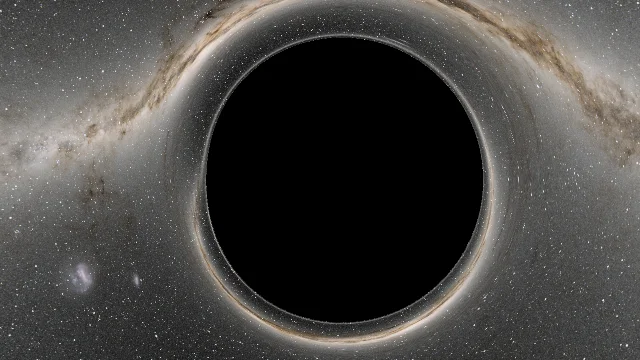
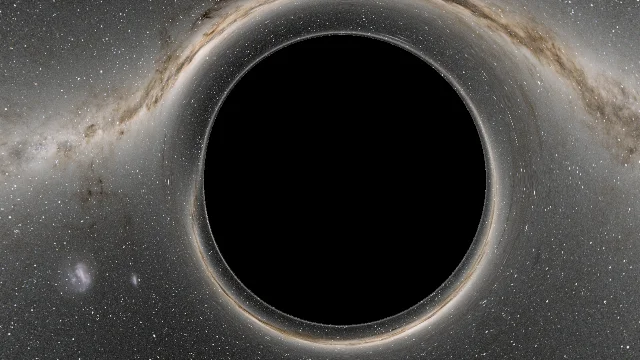
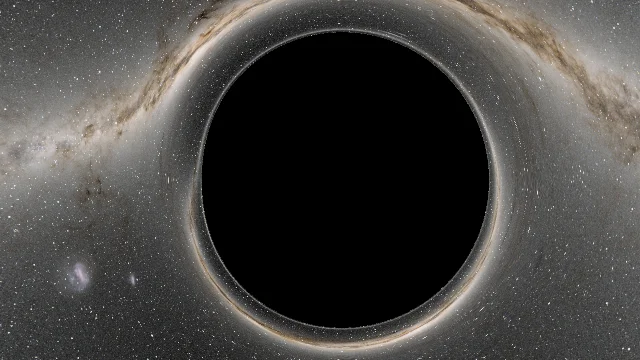
Moving around
I built a black-hole renderer in Rust and Bevy. You can fly around the disk, switch between Schwarzschild and Kerr geometry, and inspect the light rays behind the image.
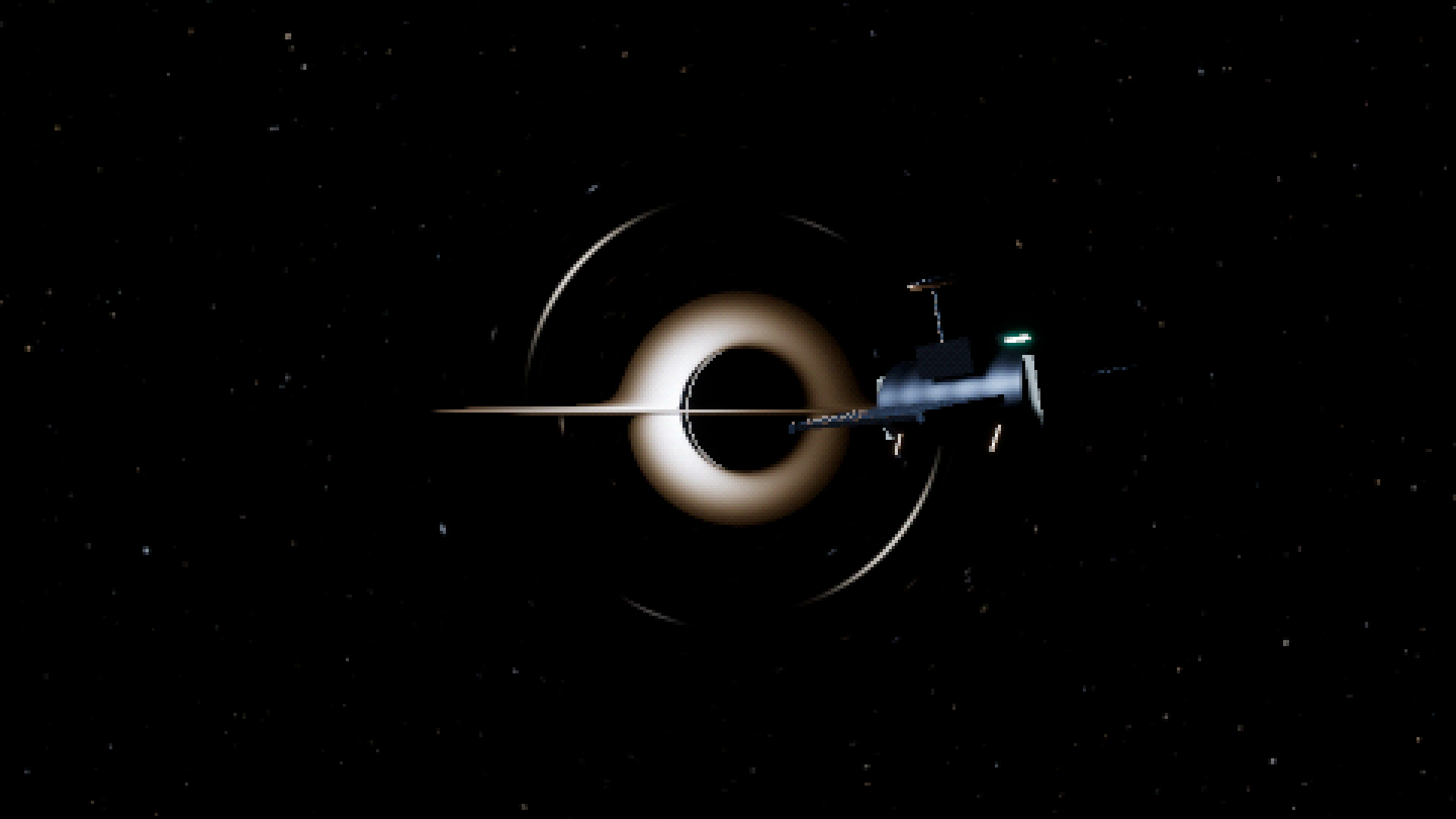
Start almost edge-on, then move sideways. The disk appears above and below the dark centre, and the stars bend around it. There are preset views and a guided flight. Movement or mouse-look lets you take over from wherever the flight has reached.
How the image is made
For each astronomical pixel, the renderer follows a numerical light ray through the chosen geometry. A ray can reach the sky, intersect the disk, be captured, or exhaust its calculation budget.
F7 switches between the continuous image and its quantized presentation. The ray inspector and celestial grid help examine the lensing. The magenta overlay shows rays that ran out of calculation steps.
The downloadable demo uses a thin analytic disk, without evolving plasma or fluid dynamics. The nearby probe uses ordinary projection: it is neither gravitationally lensed nor hidden by the black hole. The camera stays outside its supported external-observer boundary. This demo does not show the interior; the offline plunge study above is separate.
The rendering notes and math notes explain the implementation and its numerical limits.
Try the Windows demo
Download the free demo from itch.io or GitHub Releases. Extract the complete folder and run Start Journey.cmd for the guided flight or Free Exploration.cmd for free movement.
The tested setup is Windows/Vulkan on an NVIDIA RTX 4060. Other hardware and backends are unverified. There is no playable browser build in this release.